I have a knowledge gap in my family history. There’s plenty of documentation (including photographs and even US Immigration documents) about my father’s family in Clifton, Arizona, thanks to extensive genealogy research done by my Uncle Bobby in 2008, derived from the National Archives and Records Administration.
My Uncle Bobby wrote:
Evidently, our father (grandfather, great grandfather, etc.) immigrated to the United States in 1882, which was the year the Chinese Exclusion Act was passed. According to Joseph Sanchez, Archives Technician who assisted me in the research, Dad probably arrived just before the Exclusion Act was implemented (passed in 1882 and initially enforced from 1882 thru 1884). Before the Act, foreigners, including Chinese, needed very little documentation to come to the US; they literally just walked off the boat. This must have been the situation with Dad. There is no information on which ship he came on, or other information prior to 1906 since many records were destroyed in an Angel Island fire in 1884. So Dad’s sojourn begins in 1906 when he applied for permission to go back to China for a visit.
Fact Check: Angel Island & Exclusion Act Timeline
Fact check:
The Historical Fact: The Angel Island Immigration Station did not exist in 1884—it opened in 1910. Furthermore, the famous fire that destroyed the Angel Island Administration Building occurred on August 12, 1940.
What Actually Destroyed the Pre-1906 Records: The missing pre-1906 records were almost certainly destroyed in the Great San Francisco Earthquake and Fire of April 1906. The fire burned down the U.S. Customs House, Hall of Records, and City Hall, wiping out thousands of immigration, birth, and municipal records.
The Chinese Exclusion Act was enforced differently exactly two years after its creation. Congress passed the Chinese Exclusion Act in 1882. However, the initial text contained loopholes and vague requirements that allowed some Chinese individuals to continue entering or re-entering the country. To close these gaps, Congress passed a major set of amendments on July 5, 1884, which significantly tightened enforcement. The Chinese Exclusion Act was not just enforced for two years; it was continuously enforced for 61 years—from 1882 until its repeal in 1943 (via the Magnuson Act).
But I can only remember a single anecdote from my Uncle John (my father’s next-oldest brother) about how my family ended up on Calmar Avenue in Oakland.
I asked Uncle John, “How did the family end up in Oakland?” His answer, like a lot of his stories, sounded slightly apocryphal. (like the time he told me a story about looking for the Lost Dutchman ‘s Gold Mine and Mangas Coloradas)
Uncle John’s story was simple. My paternal grandfather, who ran a Chinese goods store and restaurant in Clifton, Arizona in the beginning of the 20th century, saved his money so he could take the family back to China. He went to San Francisco to make the arrangements, and he lost all the money gambling.
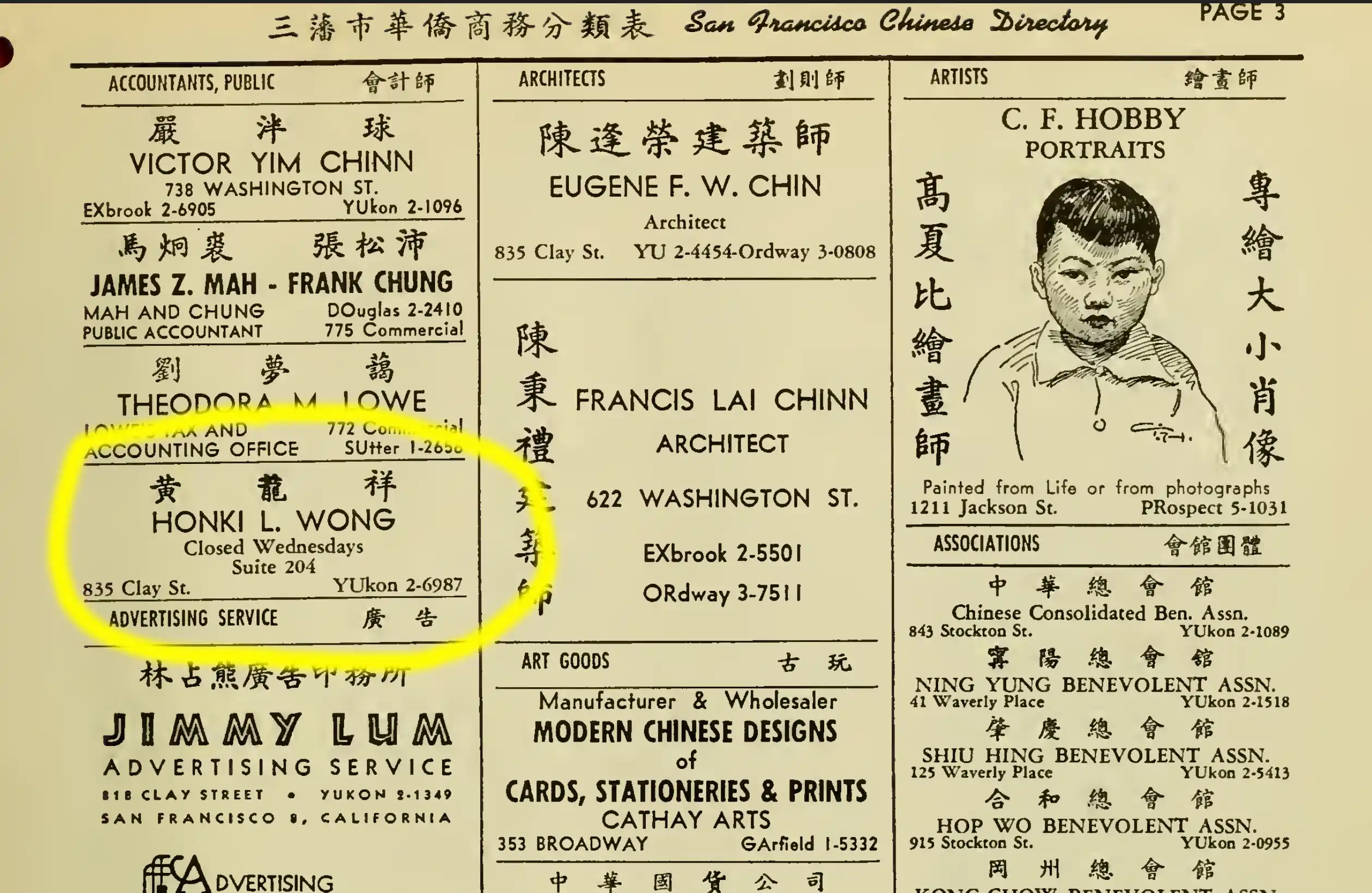
Using the documents found by my Uncle Bobby, I saw that my father’s name had been Wong Leung Tieng or Wong Lung Teng aka Honki L. Wong. Honki seems like a strange name, especially given that his brother’s names were John, Joe, James and Robert.
It was an especially interesting name since the Black Panther Party, that was founded in Oakland in 1966, popularized the term “honky.”
Gemini gave me this as an explanation of the name, Honki:
Linguistic Breakdown In Cantonese—the primary language of Hong Kong—Chinese names are translated into English using phonetic spellings rather than standard Mandarin Pinyin. “Honki” is typically composed of two Chinese characters:Hon (Hàn / 漢 or Hóng / 康): Most commonly, “Hon” translates to “Han” (referring to the Han Chinese people, culture, or dynasty) or “healthy/peaceful”.Ki (Qí / 祺, 基, or 奇): This character usually translates to “good fortune/blessing,” “foundation,” or “noble/extraordinary”.When combined, a Cantonese name like Hon-ki (漢祺 or 康基) carries auspicious meanings such as “healthy foundation” or “blessed prosperity.”
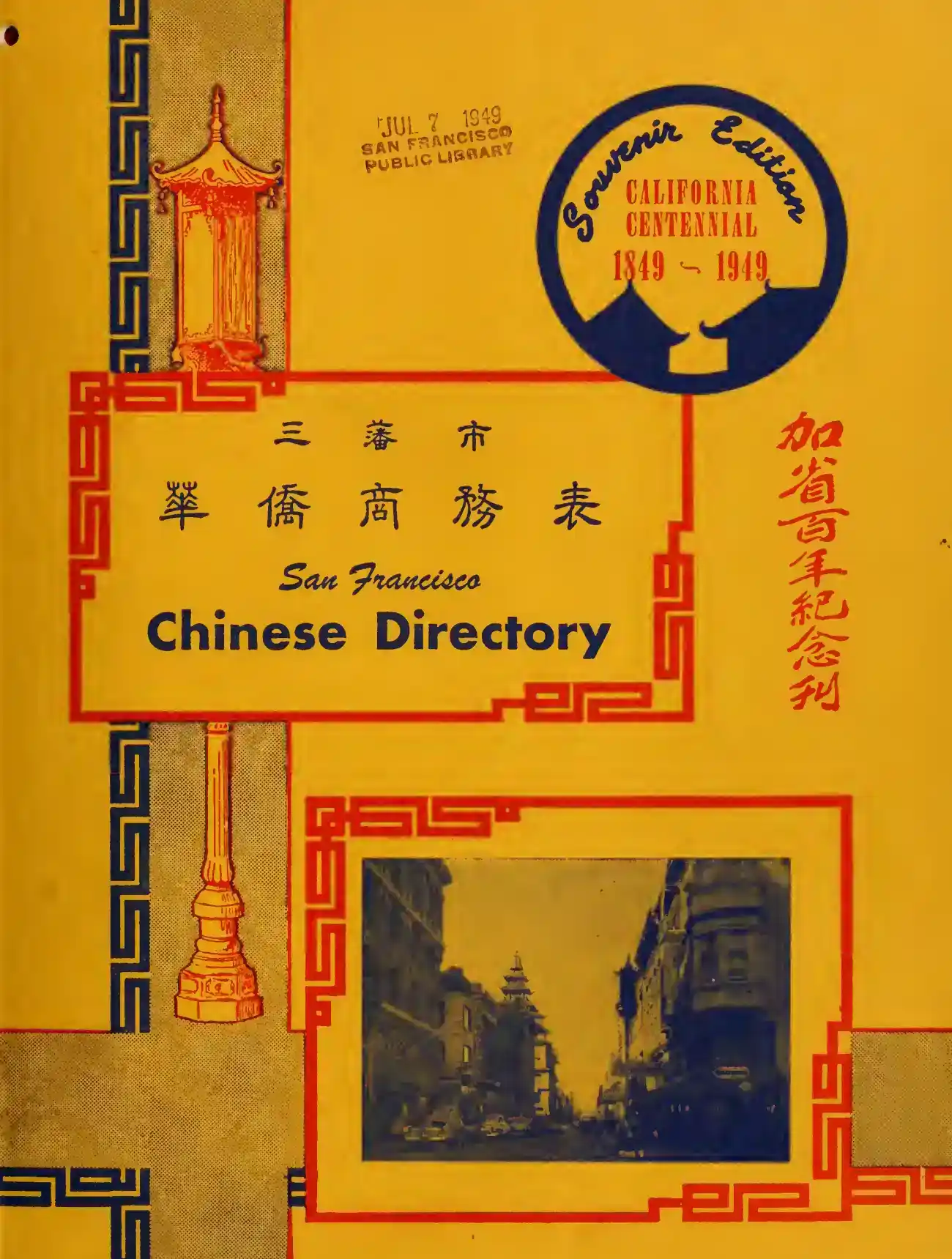
So when I searched for my father’s name, “Honki L. Wong,” the results generally seemed unique to him. Unfortunately, or not, as a consequence of my writing on this blog, a lot of the references point back here. One reference I found was 1949 San Francisco Chinese Directory, scanned by the Internet Archive from a document in the San Francisco Public Library. Inside, it’s described:
SAN FRANCISCO CHINESE DIRECTORY
is the most effective form of business and professional medium to reach the largest numbers of Chinese in the City of San Francisco and Bay Area daily throughout the year. The Chinese population within this area numbers over 42,000.